The short answer: Technical student organizations can help students practice skills employers value, build confidence and connect classroom learning with careers. But research does not yet prove that membership alone leads to more job offers or higher wages.
For CTE educators and administrators, that distinction matters. Organizations such as BPA, DECA, FBLA and SkillsUSA can be valuable parts of a program, but their impact depends on what students do, how the experiences connect to instruction, and whether students can explain what they learned.
What students can practice
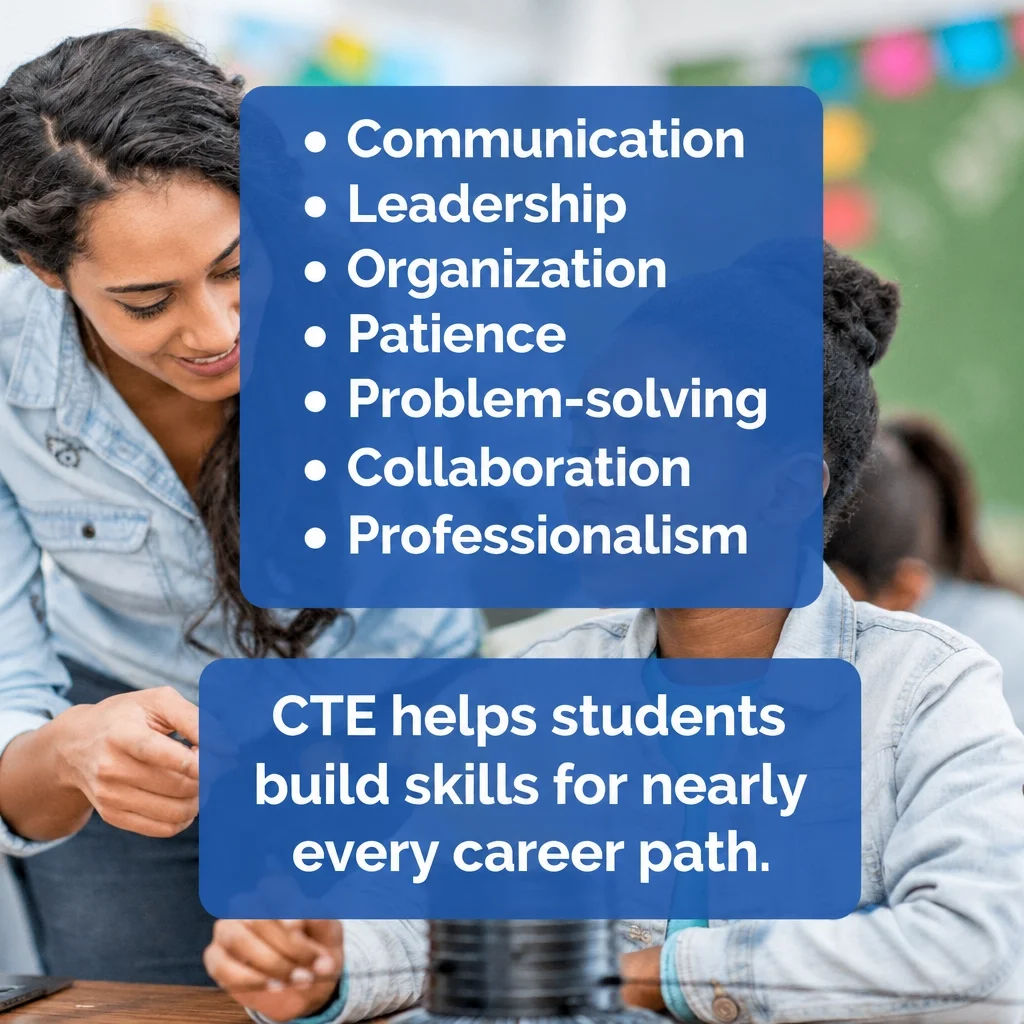
A career and technical student organization (CTSO) gives students opportunities to apply career knowledge in settings beyond routine classroom assignments. Depending on the organization and activity, students may:
Demonstrate technical or business skills in a competition.
Work with a team to plan and complete a project.
Present ideas and respond to questions.
Take responsibility for deadlines, roles and results.
Practice leadership, communication and professional conduct.
Meet educators and industry representatives.
These are not automatic outcomes of signing up. They develop when students participate meaningfully, receive feedback and reflect on their performance. A competition, for example, can give a student a concrete experience to discuss in an interview: the challenge they faced, the role they played and what they would improve next time.
What does the research say?
The evidence is encouraging, but it calls for careful wording.
A 2007 study, Looking Inside the Black Box, compared students in CTE classes with a CTSO, students in CTE without one, and students in general education classes. It found that students reporting more CTSO participation also reported stronger outcomes on several measures, including employability skills and career self-efficacy. The researchers also found positive associations between participation in competitions and some student outcomes.
However, the study measured student experiences and self-reported skills over one school year. It did not track whether participants received job offers, earned higher wages or stayed in jobs longer. Students chose whether to participate, too, so it is difficult to separate the effect of the organization from students’ existing interests, support or motivation. Read the study.
A 2024 systematic review examined causal research on secondary CTE more broadly. Across the reviewed studies, participation in CTE was associated with positive effects in several areas, including employability skills and employment after high school. But those findings are about CTE programs overall, not specifically about CTSO membership. The review also found no statistically significant effect on subsequent earnings. Read the systematic review.
The practical takeaway: CTSOs are a promising setting for career-readiness learning. The available research supports talking about skill development and career preparation, not promising a hiring advantage.
How CTSO activities can support career readiness
1. Students get practice they can describe
Employers need more than a list of courses. They want to understand what a candidate can do and how they approach a task. A well-designed CTSO activity gives students examples they can use in résumés, interviews and conversations with employers.
Help students make those examples specific. Instead of saying, “I learned teamwork,” they might explain how their team divided responsibilities, handled a disagreement and delivered a presentation by a deadline.
2. Competitions create a setting for feedback
Competitions can ask students to demonstrate skills against clear criteria, often under time constraints. That gives students an opportunity to prepare, perform and receive feedback, then try again. The experience can build confidence and make technical or employability skills more visible to students and advisers.
3. Employer involvement can make activities more relevant
Industry judges, speakers, mentors and project partners can help students understand workplace expectations and hear directly from professionals. These interactions may also introduce students to employers, but a conversation at an event is not the same as a job interview or offer. Treat networking as one useful possibility, not a guaranteed result.
Make a CTSO part of the program, not an add-on
For administrators deciding whether to build an organization into a CTE program, the key question is not simply, “Can we start a chapter?” It is, “How will students connect its activities to what they are learning and where they want to go?”
A few steps can help:
Match the organization to the pathway. Consider which CTSO aligns with your students’ program area and the skills they need to practice.
Plan meaningful participation. Offer activities that are accessible to beginners as well as students ready for advanced leadership or competition.
Connect activities to instruction. Identify the technical and employability skills students will use, and make those learning goals explicit.
Build in reflection. After an event or project, ask students what they did, what feedback they received and what they would change.
Create employer connections where possible. Invite local professionals to judge, mentor, speak or review student work.
Plan for access. Consider transportation, fees, schedules and other barriers that may prevent students from participating. Avoid making a CTSO experience available only to students who can cover extra costs or commitments.
Track the outcomes you want
If your school invests time and resources in a CTSO, decide how you will check whether it is meeting program goals. Membership numbers and competition results are useful, but they do not show the full picture.
You might also track:
Which students participate and how consistently.
Student work samples, presentations or portfolio artifacts.
Skill growth using a rubric before and after an activity.
Student confidence in presenting their skills and career goals.
Employer participation and feedback.
Internships, interviews or job offers students report after graduation, where appropriate and with suitable consent.
Keep the distinction between participation, learning outcomes and employment outcomes clear. Tracking job offers can help you understand students’ transitions, but it does not by itself show that CTSO participation caused those outcomes. Students’ experiences, program quality and local labor-market conditions all matter.
Indiana organizations and events
Indiana ACTE’s event calendar includes listings for student organization competitions and conferences, including SkillsUSA, BPA, FBLA and DECA. Event dates and details change by year, so check the Indiana ACTE events calendar for current information.
Use these events as opportunities to see how students apply their skills, connect with peers and engage with the broader CTE community. You can also explore the organization that best fits your program and contact its state association or your school’s CTE adviser for guidance on chapter participation.
The bottom line
Technical student organizations can give students valuable chances to practice, demonstrate and discuss career-ready skills. Those experiences may strengthen preparation for work and give students useful examples for résumés and interviews.
But the evidence does not establish that membership by itself gets students hired. The strongest approach is to make CTSO participation purposeful: connect it to pathway learning, provide meaningful practice and feedback, widen access, and track what students can demonstrate afterward.
For educators and administrators, that’s a practical reason to consider a CTSO, not as a hiring guarantee, but as one way to help students build and show what they know.